The Ryze Tello has been the default first drone for years. It weighs 80 grams, flies for about 13 minutes, and shoots 5MP photos. That tiny package makes it legal to fly without FAA registration in the US for recreational use. But the Tello is not the only option anymore. DJI, Holy Stone, and others sell beginner drones with better cameras and longer flight times. This comparison breaks down the Tello lineup and the best alternatives so you can pick the right one. If you are completely new, start with our best drones for beginners guide. Then come back here to see how the Tello stacks up.
Before you buy any drone, check the rules. The FAA’s drone registration rules apply to drones over 250 grams. The Tello is far below that limit, so you can fly it recreationally without registration in the US. In Canada, Transport Canada drone safety rules require registration for drones between 250 grams and 25 kilograms. The Tello is under 250 grams, but you still need to follow safety guidelines. Commercial pilots need a Part 107 certificate in the US. If you plan to make money with any drone, read our drone laws in the USA guide first.
The Tello lineup is confusing. Ryze makes the base Tello. DJI sells the Tello EDU for education. RoboMaster sells the TT for robotics competitions. All three share the same 80-gram body, 13-minute flight time, and 5MP camera. The differences are software, sensors, and accessories. If you want a simple toy, the base Tello is enough. If you want to learn Python or compete in robotics, the EDU or TT makes more sense. The DJI website lists official specs, but real-world performance depends on battery health and wind. Battery health matters because Tello batteries lose capacity after 100 cycles. Always store batteries at half charge for longer life.
For many pilots, the Tello is a gateway. You learn stick control, throttle management, and how to handle a drone without GPS. Then you upgrade. The DJI Mini 4K flies 31 minutes and shoots 4K video. The Holy Stone HS210 costs less and survives crashes. Each option has trade-offs. This guide covers flight time, weight, camera quality, and rules. By the end, you will know which Tello model or alternative fits your budget and goals. No prices are listed because they change too often. Use the check price links to see current deals. That keeps the guide accurate over time.
How Do the Top Options Compare?
| Model | Best For | Flight Time | Weight | Camera | Check Price |
|---|---|---|---|---|---|
| Ryze Tello | Absolute beginners | 13 min | 80 g | 5MP / 720p | Check price |
| Tello EDU | Coding and STEM | 13 min | 80 g | 5MP / 720p | Check price |
| RoboMaster TT | Robotics competitions | 13 min | 80 g | 5MP / 720p | Check price |
| DJI Mini 4K | Aerial photography | 31 min | 249 g | 4K | Check price |
| Holy Stone HS210 | Kids and indoor toys | 7 min | 41 g | 720p | Check price |
Flight times are manufacturer estimates. Real flight time drops in wind or cold. The Tello and Holy Stone are under 250 grams. The DJI Mini 4K is 249 grams, so it also avoids FAA registration for recreational flights in the US. Always check local rules before flying. Commercial use requires Part 107 in the US or advanced certification in Canada.
1. Ryze Tello , Best for absolute beginners
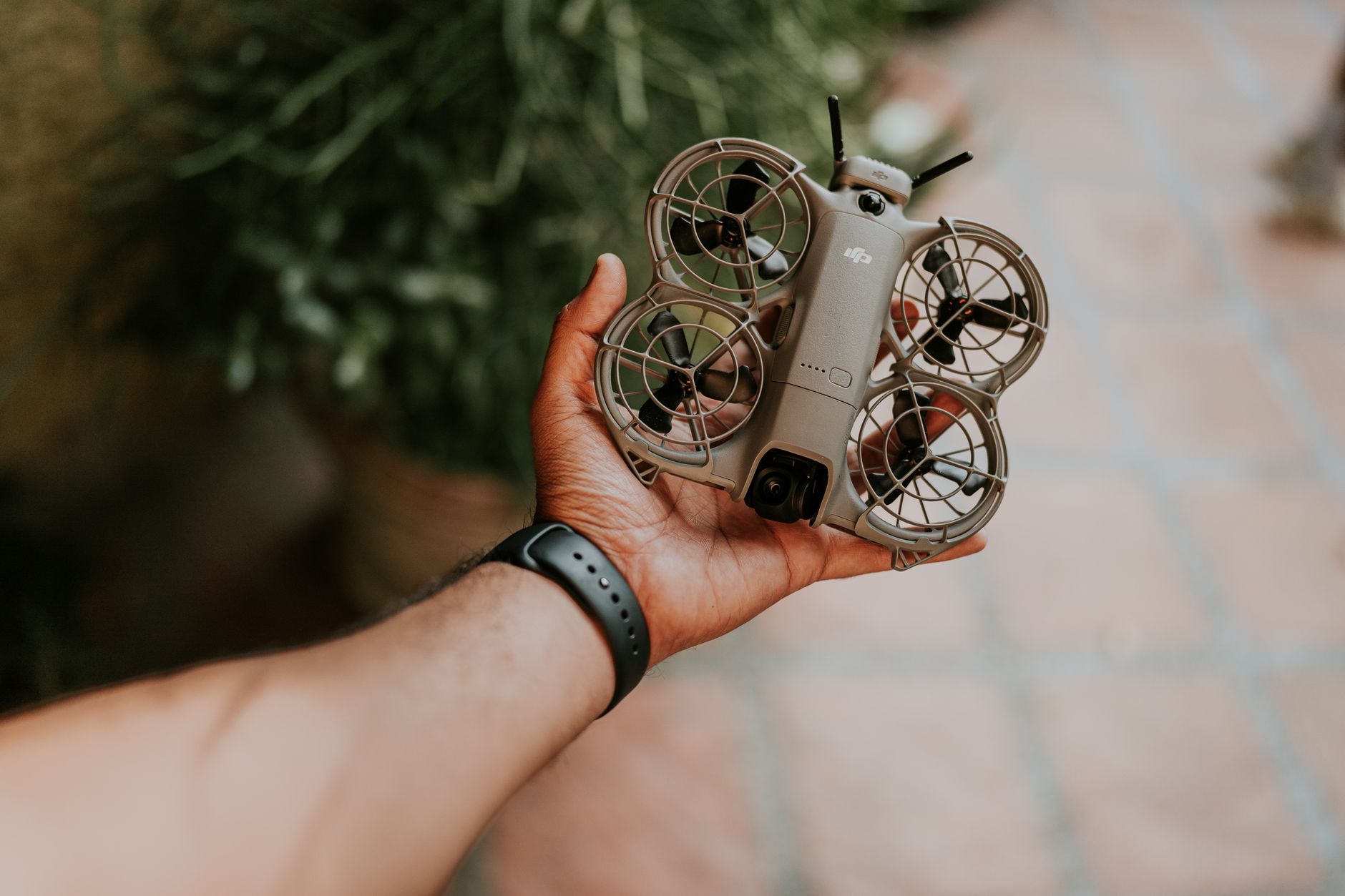
The Ryze Tello is the original. It weighs 80 grams and fits in a coat pocket. A single battery lasts about 13 minutes. The camera captures 5MP photos and 720p video at 30fps. That is not 4K, but it is fine for learning framing. The drone uses a downward-facing vision sensor for indoor hover. No GPS means it drifts in wind. Outdoors, fly on calm days only. The range is about 100 meters without an extender. For more battery tips, read our drone battery care guide. You can Check the Ryze Tello on Amazon.
The Tello is easy to control with the Tello app. TapFly and Throw and Go modes make it fun for kids. But the lack of GPS means it will not return to home automatically. If you lose signal, it will drift or land. That is a real downside. The 720p video also looks soft on a 4K TV. Still, for indoor practice, it is hard to beat.
Compared to the Tello EDU, the base Tello is simpler. You do not get Scratch or Python support. If you just want to fly, save the extra features for later. The Tello is a learning tool, not a camera drone. Use it to build stick skills before you buy a GPS drone like the DJI Mini 4K.
Key strengths:
- ✅ Weighs only 80 grams, so it avoids FAA registration for recreational flights in the US.
- ✅ Flies about 13 minutes per battery, which is good for a drone this small.
- ✅ Costs less than most beginner drones and survives light crashes.
- ✅ Uses a 5MP camera that takes usable photos in good light.
- ✅ Fits in a pocket and can fly indoors without GPS.
- ❌ Shoots only 720p video at 30fps, which looks dated.
- ❌ Range is limited to about 100 meters without a WiFi extender.
- ❌ No GPS means no return to home and poor wind resistance.
Who it’s for: Choose the Ryze Tello if you want the cheapest way to learn manual drone control indoors.
2. Tello EDU , Best for coding and STEM learning
The Tello EDU uses the same body as the base Tello. It also weighs 80 grams and flies about 13 minutes. The camera is still 5MP with 720p video. The difference is software. The EDU supports Scratch, Python, and Swift. You can program flight paths, flips, and even swarm formations with multiple drones. Schools use it to teach coding and robotics. For parents, our best drones for kids guide has more safe starter options.
The EDU comes with a mission pad set. These pads let the drone navigate indoor courses without GPS. That is useful for classroom challenges. The drone also has a better SDK for developers. But the flight experience is identical to the base Tello. You still get no GPS and a 100-meter range. The battery lasts 13 minutes, but cold weather cuts that to 10 minutes or less.
If you just want to fly, the EDU is overkill. The coding features add cost without improving camera quality. But if you teach STEM or want to learn Python with a drone, the EDU is the best Tello model. You can Check the Tello EDU on Amazon.
Key strengths:
- ✅ Supports Scratch, Python, and Swift for real coding practice.
- ✅ Works with mission pads for indoor navigation challenges.
- ✅ Same 80-gram weight and 13-minute flight time as the base Tello.
- ✅ Can fly in swarms with multiple Tello EDU drones.
- ✅ Good for classrooms and STEM programs.
- ❌ Camera still limited to 5MP photos and 720p video.
- ❌ No GPS, so outdoor flights need calm weather.
- ❌ Costs more than the base Tello without better flight performance.
Who it’s for: Choose the Tello EDU if you want to learn programming or teach a robotics class.
3. RoboMaster TT , Best for robotics competitions
The RoboMaster TT is also called the Tello Talent. It is the most advanced Tello. The body is still 80 grams and the battery still gives about 13 minutes. But the TT adds a time-of-flight sensor, an LED matrix, and an AI camera. You can program it to recognize gestures, follow lines, and avoid obstacles. It also supports Python and Scratch.
The TT is built for competitions like RoboMaster. The LED matrix lets you display letters and patterns. The ToF sensor helps with precise indoor hovering. The AI camera can detect objects and people. That makes it a strong teaching tool for computer vision. But the video transmission is still 720p. The range is still about 100 meters. And the price is higher than the base Tello.
If you are serious about robotics, the TT is worth it. For casual flying, it is too complex. It is a specialized tool for competitions and advanced classroom projects.
Key strengths:
- ✅ Adds a time-of-flight sensor for stable indoor hovering.
- ✅ Includes an LED matrix and AI camera for robotics projects.
- ✅ Supports Python, Scratch, and Swift programming.
- ✅ Weighs 80 grams and flies 13 minutes per battery.
- ✅ Designed for RoboMaster competitions and classroom challenges.
- ❌ Camera video is still 720p, not 4K.
- ❌ Range remains about 100 meters without an extender.
- ❌ Higher cost than the base Tello and Tello EDU.
Who it’s for: Choose the RoboMaster TT if you compete in robotics events or need advanced sensors.
4. DJI Mini 4K , Best upgrade for aerial photography
The DJI Mini 4K is not a Tello, but it is the natural upgrade. It weighs 249 grams, just under the FAA’s 250-gram registration threshold. The battery flies for 31 minutes. The camera shoots 4K video at 30fps and 12MP photos. The range reaches up to 10 kilometers with OcuSync 2.0. That is a massive jump from the Tello’s 100-meter WiFi range.
The Mini 4K has GPS, return to home, and wind resistance up to level 5. It can hover in a breeze that would blow a Tello away. The three-axis gimbal keeps video smooth. The Tello has no gimbal, so its video shakes. If you want to shoot real estate or travel videos, the Mini 4K is the better tool. Our best travel drones 2026 guide covers more portable options.
Downsides exist. The Mini 4K costs much more than the Tello. It also does not have obstacle avoidance. You must watch where you fly. But for pilots who outgrow the Tello, it is the obvious next step. You can Check the DJI Mini 4K on Amazon.
Key strengths:
- ✅ Flies for 31 minutes, more than double the Tello’s flight time.
- ✅ Shoots 4K video and 12MP photos with a three-axis gimbal.
- ✅ Weighs 249 grams, so it stays under the FAA registration limit for recreational flyers.
- ✅ Has GPS, return to home, and 10 km transmission range.
- ✅ Handles wind much better than the Tello.
- ❌ Costs significantly more than any Tello model.
- ❌ No obstacle avoidance sensors.
- ❌ Prop guards or accessories can push it over 250 grams.
Who it’s for: Choose the DJI Mini 4K if you want to move from learning to fly to shooting real aerial video.
5. Holy Stone HS210 , Best cheap indoor toy alternative
The Holy Stone HS210 is a tiny indoor drone. It weighs 41 grams and flies for about 7 minutes. The camera is 720p, similar to the Tello. But the HS210 is cheaper and more durable. It has propeller guards and a headless mode for beginners. It can do flips and return to home with one button. For kids, it is a low-risk way to learn.
The HS210 is not a camera drone. The video is shaky and low resolution. The range is short, about 30 meters. The battery lasts only 7 minutes. But it costs very little. If a crash breaks it, you are not out much money. Our best budget drones guide has more options like this.
The Tello is better for programming and camera quality. The HS210 is better for pure indoor fun. It is a simple indoor toy that takes abuse and keeps flying.
Key strengths:
- ✅ Weighs only 41 grams, so it is safe for indoor play.
- ✅ Costs less than the Tello and comes with propeller guards.
- ✅ Has headless mode and one-button flips for beginners.
- ✅ Flies about 7 minutes per battery, enough for short indoor sessions.
- ✅ Very durable and easy to replace.
- ❌ Flight time is only 7 minutes, half the Tello’s time.
- ❌ Camera quality is poor and video is shaky.
- ❌ Range is limited to about 30 meters.
Who it’s for: Choose the Holy Stone HS210 if you want a cheap, tough indoor drone for kids.
Frequently Asked Questions
How long does a Tello drone fly?
About 13 minutes per battery. Real time can be 10 to 12 minutes with wind or cold temperatures.
Does the Tello need FAA registration?
No for recreational use in the US because it weighs 80 grams. The FAA registration rule applies to drones over 250 grams. Commercial use requires Part 107.
What is the range of the Tello?
About 100 meters with the stock app and phone. A WiFi extender can push it further, but the video feed may lag.
Can the Tello shoot 4K?
No. It shoots 5MP photos and 720p video at 30fps. The DJI Mini 4K is a better choice for 4K.
Is the Tello good for kids?
Yes, with adult supervision. It is lightweight and has propeller guards. But the motors are exposed, so keep fingers away.
What is the difference between Tello and Tello EDU?
The hardware is nearly identical. The EDU adds programming support for Scratch, Python, and Swift. It also supports swarm flying with multiple drones.
What Should You Remember?
- Flight time: The Tello flies about 13 minutes, but expect 10 to 12 minutes in real conditions.
- Weight: At 80 grams, the Tello is under the FAA’s 250-gram registration threshold for recreational flyers.
- Camera: The Tello shoots 5MP photos and 720p video, so it is a learning tool, not a filmmaking drone.
- Upgrade path: The DJI Mini 4K offers 31 minutes of flight and 4K video for pilots who outgrow the Tello.
- Rules: Commercial flights need Part 107 in the US, and Canadian rules require registration for drones over 250 grams.
- Best for kids: The Holy Stone HS210 is cheaper and more rugged than the Tello for indoor play.
- Battery care: Tello batteries last longer if you store them at half charge and avoid full drains.
This article is for general information only. Drone regulations vary by region and change frequently , always verify current local laws and airspace rules before flying.